
Walking normally again is often the biggest milestone after surgery. According to Johns Hopkins Medicine, patients usually need an assistive device while strength and balance return, and full recovery may take several months.
That uncertainty can feel frustrating. Many people want to know when they can move freely, climb stairs, or leave the house with confidence. Recovery often feels slow because swelling and weakness change week by week.
This guide explains the usual walking timeline in simple terms. It also shows what affects recovery after robotic knee replacement and what to expect if you are planning robotic knee replacement surgery in Thane. You will also learn what helps recovery stay on track.
How long does it usually take to walk normally after surgery?
Most patients start walking very early, usually with a walker, crutches, or another aid. The goal is not perfect walking on day one. The goal is safe movement and gradual improvement.
For many people, walking looks more natural around four to six weeks. That is often the point when gait starts to feel closer to normal.
A truly normal-feeling walk can take several months. Full recovery after total knee replacement takes months, not days. That is why patience matters after robotic knee replacement as much as physical therapy does.
Why does robotic surgery not remove the rehab phase?
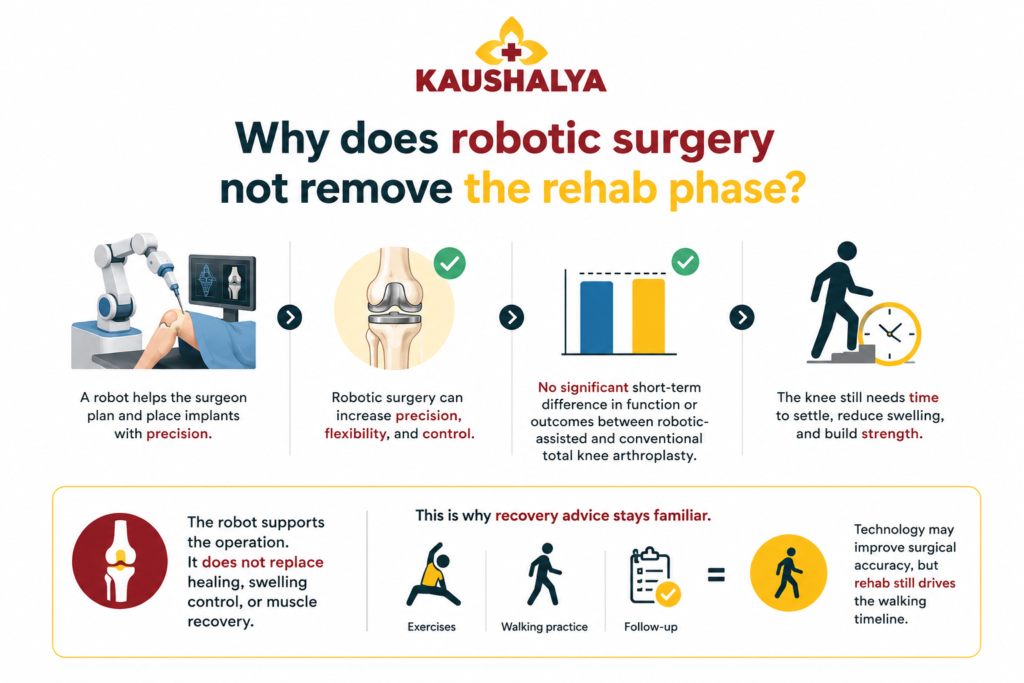
A robot helps the surgeon plan and place implants with precision. Robotic surgery can increase precision, flexibility, and control. No significant short-term difference in function or outcomes between robotic-assisted and conventional total knee arthroplasty.
That means the robot supports the operation. It does not replace healing, swelling control, or muscle recovery. The knee still needs time to settle and strengthen after robotic knee replacement.
This is why recovery advice stays familiar. You still need exercises, walking practice, and follow-up. The technology may improve surgical accuracy, but rehab still drives the walking timeline.
What does the first six weeks usually look like?
The first few days are about safe movement. Walking short distances helps circulation and reduces stiffness. Patients are often encouraged to move frequently, even if the steps are short.
During weeks one to two, swelling and pain are still common. That is normal, and it often changes with activity. Most patients keep using an aid during this stage.
By weeks three to six, walking often becomes smoother. Some people move from a walker to a cane or one stick. A useful way to think about it is this: the first month builds safety, and the next month builds confidence. That is the usual pattern after robotic knee replacement surgery in Thane and elsewhere.
What helps you walk more comfortably sooner?
The right habits can make a real difference. Regular exercise and gradual return to daily activities are important for full recovery.
- Do the exercises given by your physiotherapist.
- Walk short distances several times a day.
- Keep swelling down with elevation and ice when advised.
- Do not rush to ditch the walking aid.
- Keep follow-up appointments on time.
These steps support strength, balance, and confidence. They also reduce the chance of overdoing activity too early. That matters after robotic knee replacement just as much as after any other knee replacement.
When should slow progress be checked?
Some delay is normal. But worsening symptoms should never be ignored. Call your doctor if you notice increasing redness, drainage, or pain that is getting worse. Also seek help for calf pain, swelling, or tenderness that does not settle. Shortness of breath or chest pain needs urgent medical attention.
If walking feels dramatically worse instead of gradually better, ask for review. That is especially important if swelling suddenly increases. The safest recovery is the one that is monitored closely.
Why does choosing the right local team in Thane matter?
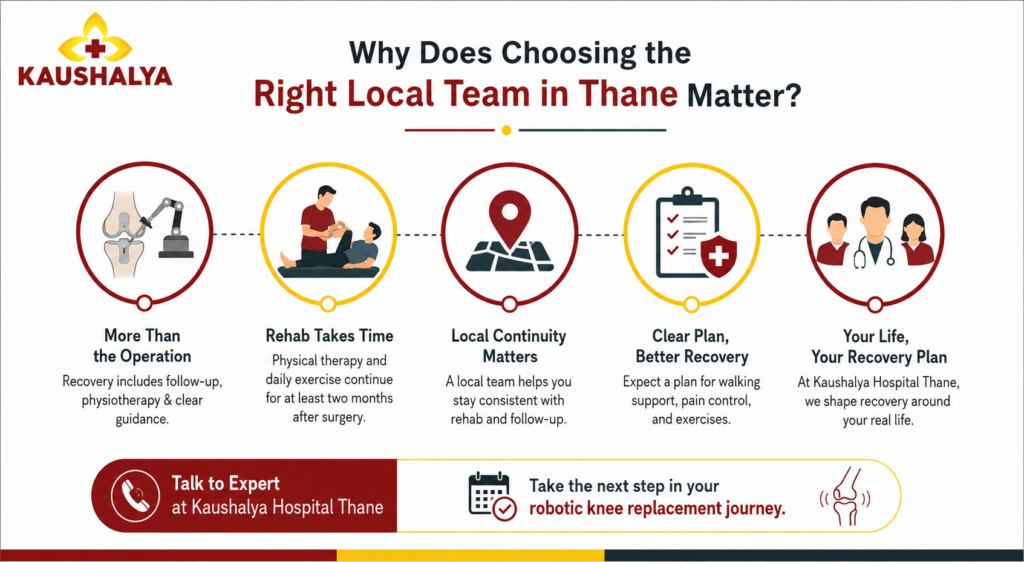
Recovery is not only about the operation. It is also about follow-up, physiotherapy, and clear guidance. Physical therapy and daily exercise continue for at least two months after surgery.
That is why local continuity matters. If you are exploring robotic knee replacement in Thane, choosing a team that supports rehab can help you stay consistent. That is a practical advantage, not just a convenience.
For patients comparing options, robotic knee replacement surgery in Thane should include a clear plan for walking support, pain control, and exercises. That is the kind of support people should expect from a serious joint-care pathway.
At Kaushalya Hospital Thane, the right conversation starts with your current mobility, not just the scan. That helps your surgeon and therapy team shape recovery around your real life. Talk to Expert at Kaushalya Hospital Thane for the next step in your robotic knee replacement journey.
Conclusion
Most patients walk with support right after surgery. Many begin to walk more naturally by four to six weeks. A fully normal-feeling gait often takes several months.
Robotic assistance improves surgical precision. It does not remove the need for healing or rehabilitation. That is why walking normally again depends on patience, exercises, and follow-up.
If you are planning robotic knee replacement, focus on the recovery plan as much as the surgery itself. With the right care, the return to normal walking becomes steadier and safer. Talk to Expert at Kaushalya Hospital Thane when you are ready to discuss your knee replacement options.