

Summary
Persistent hip pain is not always “normal ageing”. Night pain and walking pain matter most. Stiffness, limp, and limited movement are warning signs. Surgery is considered when daily life starts shrinking. Kaushalya Hospital, Thane, can help assess next steps.
Introduction
According to recent orthopaedic guidance, hip pain becomes more serious when rest, medicines, and simple movement changes stop helping. At that stage, the joint may be wearing down faster than expected. That is where hip replacement surgery in Thane may enter the discussion.
Many people try to ignore the pain for months. They change how they walk. They avoid stairs. They stop long drives and family outings. The pain slowly takes over normal life.
This guide explains the signs, decision points, and recovery basics. You will learn when pain is manageable, and when it needs an orthopaedic review. You will also see how hip replacement surgery in Mumbai and Thane patients are usually assessed by the same clinical standards.
What hip pain signs should you never ignore?
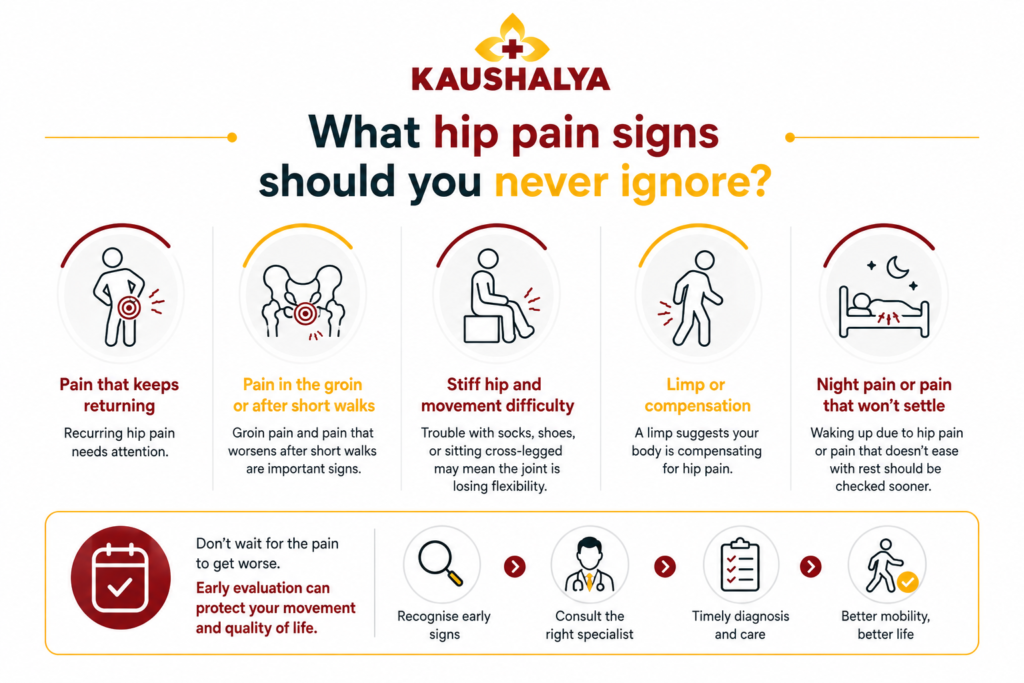
Hip pain that keeps returning needs attention. Pain that spreads into the groin is especially important. So is pain that worsens after short walks.
A stiff hip is another warning sign. If you struggle to put on socks, tie shoes, or sit cross-legged, the joint may be limiting movement. A limp also suggests the body is compensating.
Night pain matters too. If you wake up because of hip pain, the problem may be advancing. Pain that no longer settles with rest should be checked sooner.
When does everyday pain become a surgery discussion?
Doctors usually look at function, not pain alone. They ask how the pain affects your day. They also check whether treatment still works.
Here is a simple way to think about it:
| Situation | What it may mean |
| Pain only after heavy activity | May still be manageable |
| Pain during normal walking | Needs orthopaedic review |
| Pain at night or at rest | More concerning |
| Stiffness with daily tasks | Joint movement may be failing |
| Limping or using support | The hip may need stronger treatment |
| Medicines no longer help | Surgery may be discussed |
If these signs keep building, hip replacement surgery in Thane may be one option. Kaushalya Hospital can evaluate whether the pain comes from arthritis, injury, or joint damage.
How do doctors decide between treatment and surgery?
Doctors do not rush to surgery. They usually start with medicines, physiotherapy, weight management, and activity changes. They also check X-rays and movement range.
What usually comes first?
Most patients try non-surgical care first. This may reduce pain for a while. It may also improve strength around the hip.
When does surgery become more likely?
Surgery is often discussed when pain keeps returning. It becomes more likely when walking, sleeping, or working is affected. It is also considered when joint damage is clear on scans.
Many people asking about hip replacement surgery in Thane are already past the stage where simple treatment helps enough. A surgeon then looks at overall health, age, bone condition, and daily limitations.
What symptoms suggest the hip joint is wearing out?
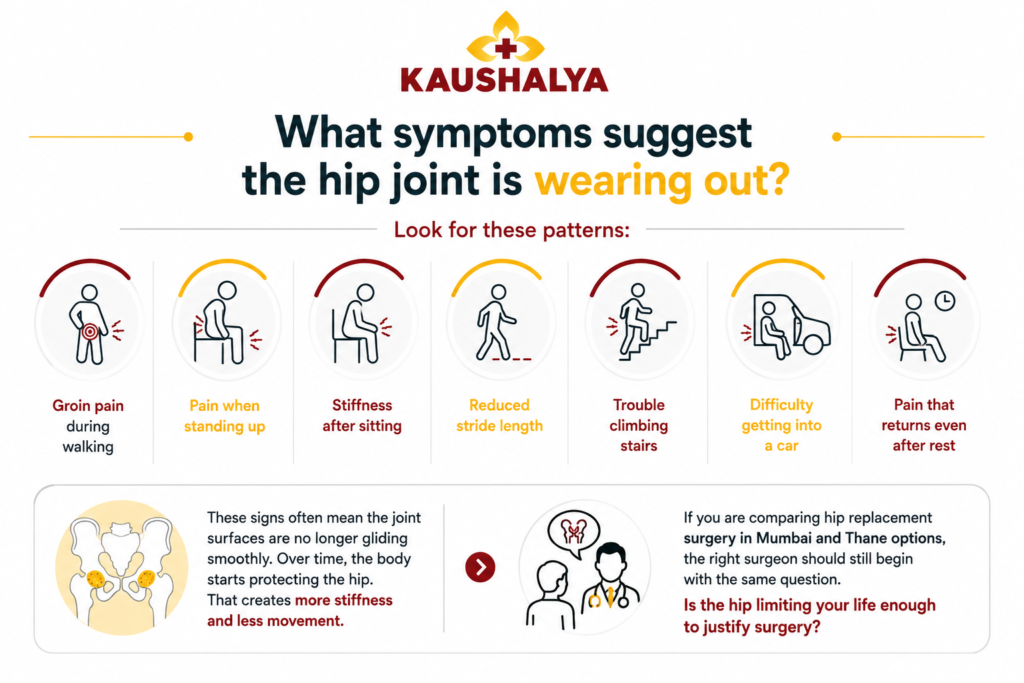
Some symptoms point strongly towards joint damage. These symptoms usually grow slowly.
Look for these patterns:
- Groin pain during walking.
- Pain when standing up.
- Stiffness after sitting.
- Reduced stride length.
- Trouble climbing stairs.
- Difficulty getting into a car.
- Pain that returns even after rest.
These signs often mean the joint surfaces are no longer gliding smoothly. Over time, the body starts protecting the hip. That creates more stiffness and less movement.
If you are comparing hip replacement surgery in Mumbai and Thane options, the right surgeon should still begin with the same question. Is the hip limiting your life enough to justify surgery?
What should you know before choosing surgery?
Surgery is usually considered after a full assessment. That assessment looks at pain, scans, and your general health. It also checks what matters most to you.
Benefits and limits of surgery
| Potential benefit | What it means in real life |
| Less pain | Easier walking and sleeping |
| Better movement | More comfort during daily tasks |
| Improved confidence | Less fear of falling |
| Greater independence | Less reliance on help |
| Possible limit | What it means in real life |
| Recovery time | You need patience after surgery |
| Physiotherapy | Exercises are part of healing |
| Temporary restrictions | Some movements may be limited early on |
| General surgery risks | These are reviewed before the operation |
A good orthopaedic team will explain all of this clearly. At Kaushalya Hospital, patients usually benefit from a step-by-step review before any decision is made.
What does recovery look like after hip replacement?
Recovery begins early. Most patients start moving with support soon after surgery. That early movement helps reduce stiffness and build confidence.
The first few weeks focus on safe walking, pain control, and basic exercises. You may need support for stairs and longer walks. Daily tasks become easier over time.
Physiotherapy is important. It helps the new joint move well. It also supports balance and muscle strength.
Most people improve gradually. They often notice less pain before they regain full stamina. That is normal. Healing is steady, not instant.
Is the same advice true for Thane and Mumbai patients?
Yes. The medical decision is not based on the city alone. It is based on symptoms, scans, and function.
Still, location matters for convenience. Many families prefer care close to home. Others compare hip replacement surgery in Mumbai and Thane for specialist access, travel time, and follow-up visits.
For many patients in Thane, local care is easier after surgery. Regular reviews, physiotherapy visits, and pain checks become simpler. That can make recovery smoother and less stressful.
At Kaushalya Hospital, the focus is on practical care and timely assessment. That matters when pain is already disrupting work, sleep, and movement.
When should you book an orthopaedic consultation?
Book a consultation when hip pain is no longer occasional. Book it when walking feels harder each week. Book it when stairs, sleep, or dressing are affected.
If you are weighing hip replacement surgery in Thane, the right next step is a specialist assessment. Kaushalya Hospital can help you understand whether your hip pain still has non-surgical options, or whether surgery is now the better path.
FAQ: Common questions about hip pain and surgery
How do I know my hip pain is serious?
If pain affects walking, sleep, or daily tasks, it needs review. Night pain, limp, and stiffness are key warning signs.
Can hip pain be treated without surgery?
Yes, sometimes. Medicines, physiotherapy, and lifestyle changes may help early stages. Surgery is considered when these no longer work well.
Is hip replacement surgery in Thane suitable for older adults?
It can be, depending on health and joint damage. Age alone does not decide treatment. Fitness and mobility matter more.
How long should I wait before seeing a doctor?
Do not wait if pain is worsening. Seek review when pain becomes regular, affects sleep, or limits normal movement.
Is hip replacement surgery in Mumbai different from Thane?
The medical principles are the same. The main differences are travel, convenience, and where follow-up care feels easiest.
Conclusion
Hip pain becomes serious when it changes how you live. Pain at rest, night pain, stiffness, and limping are major signs. When medicines and exercises stop helping, surgery may be discussed.
The right decision depends on your symptoms and scan findings. It also depends on how much the pain affects your daily life. If you are considering hip replacement surgery in Thane, Kaushalya Hospital offers the guidance you need.
Book an appointment with Kaushalya Hospital, Thane, and get your hip pain assessed properly.