

Summary: The best sleeping position for knee and hip pain is side sleeping with a firm pillow between the knees, which keeps the hips level and stops the top leg from twisting the lower spine. Back sleeping with a pillow under the knees is a close second, especially for people who can’t tolerate side sleeping. Stomach sleeping should be avoided, as it strains both the hips and the lower back. Getting this right matters more than most people realise, since joint pain and sleep quality feed into each other in both directions.
If your knees or hips ache more by morning than they did the night before, your sleeping position is worth a closer look. It’s one of the few parts of joint pain management that’s genuinely free and entirely within your control, once you know what to change.
Why Does Sleep Position Matter So Much for Joint Pain?
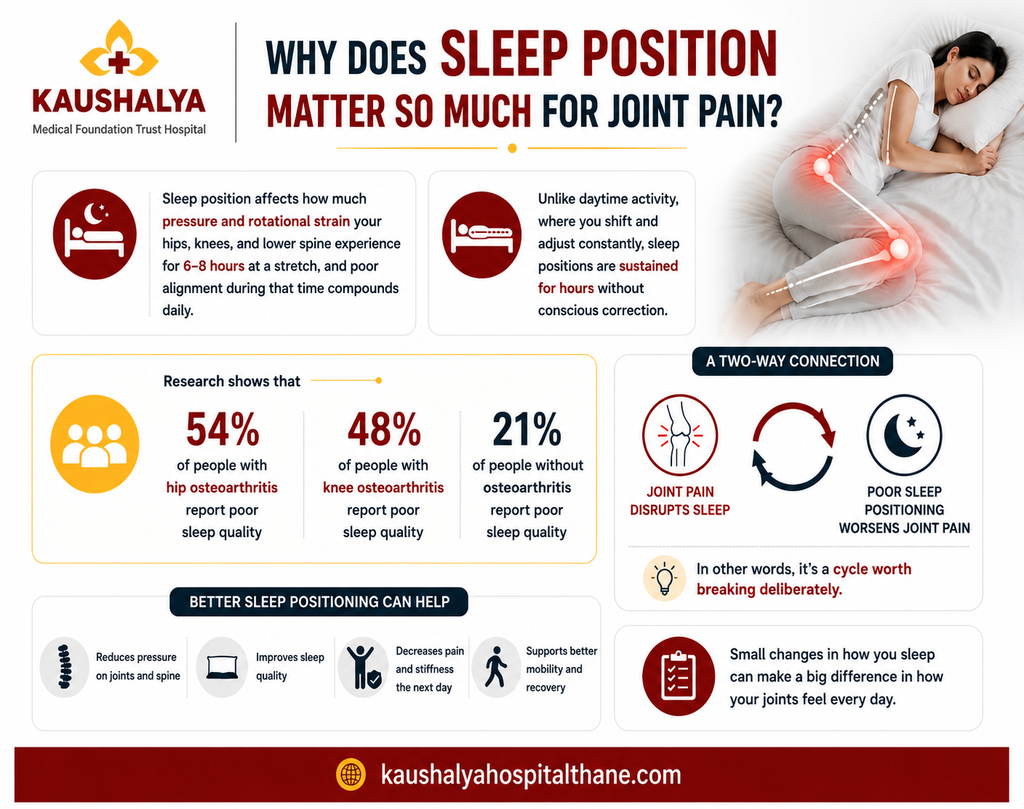
Sleep position affects how much pressure and rotational strain your hips, knees, and lower spine experience for six to eight hours at a stretch, and poor alignment during that time compounds daily. Unlike daytime activity, where you shift and adjust constantly, sleep positions are sustained for hours without conscious correction.
This relationship runs both ways. Research shows that 54% of people with hip osteoarthritis and 48% with knee osteoarthritis report poor sleep quality, compared with 21% of people without osteoarthritis, and that this connection is largely driven by pain-related sleep disturbance. In other words, joint pain disrupts sleep, and poor sleep positioning can then make the joint pain worse the next day, a cycle worth breaking deliberately.
The Best Position: Side Sleeping With a Knee Pillow
Side sleeping with a firm pillow placed between the knees is generally the best position for both hip and knee pain. The pillow keeps the pelvis level and prevents the top leg from rolling forward and twisting the lower spine, which is a common source of both hip and lower back discomfort.
To do this properly:
- Choose a pillow thick enough to fully fill the gap between your knees, not one that compresses flat under weight.
- Keep your top leg roughly in line with your bottom leg, rather than letting it drift forward.
- Sleep on the side that isn’t currently more painful, if one hip or knee is worse than the other.
The Second-Best Option: Back Sleeping With Support Under the Knees
For people who can’t comfortably side sleep, back sleeping with a pillow or wedge placed under the knees is a solid alternative. This position gently bends the hips and knees, which takes tension off the lower back and reduces the pull on hip flexors that straight-leg back sleeping can cause.
A small additional cushion or rolled towel under the lower back can add further relief for people with combined hip and back pain.
The Position to Avoid: Stomach Sleeping
Stomach sleeping is generally the worst position for hip and knee pain, since it forces the lower back into an arched position and often rotates the hips unnaturally to accommodate the neck turning to one side. If you’re a committed stomach sleeper, transitioning gradually to side sleeping with support, rather than switching overnight, tends to work better than an abrupt change.
Sleeping Position Quick Guide
| Position | Effect on Hip and Knee | Recommendation |
| Side, with knee pillow | Keeps pelvis level, reduces rotation | Best overall |
| Back, with pillow under knees | Reduces lower back and hip flexor strain | Good alternative |
| Back, no support | Some strain on the lower back | Acceptable, less ideal |
| Stomach | Arches back, rotates hips | Avoid where possible. |
Other Habits That Affect Joint Pain Overnight
Beyond position, a mattress that’s too soft lets the hips sink out of alignment, while one that’s too firm can create pressure points at the hip and shoulder. A randomised controlled trial in The Lancet found that patients with chronic lower back pain reported significantly less pain and disability on a medium-firm mattress compared with a firm one over 90 days, which lines up with what most orthopaedic clinicians recommend for hip and knee pain too.
Keeping the bedroom warm also helps, since cold tends to stiffen an already inflamed joint. Gentle mobility stretches before bed can loosen tight muscles around the hip and knee, making it easier to settle into a supportive position in the first place.
When Sleep Changes Aren’t Enough
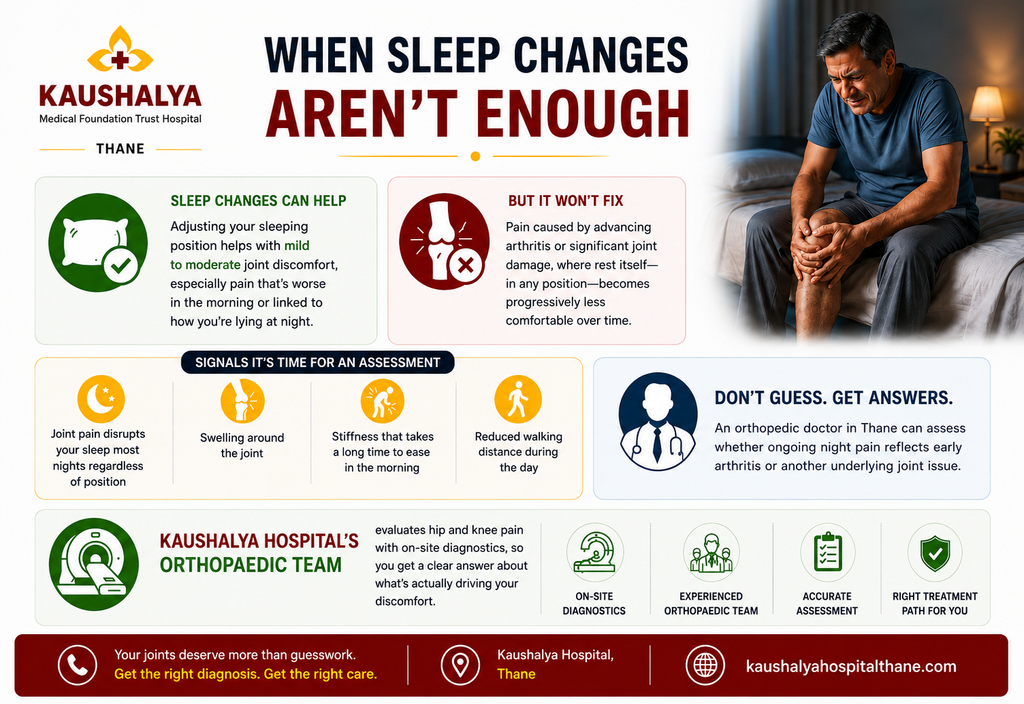
Adjusting your sleeping position genuinely helps with mild to moderate joint discomfort, particularly pain that’s worse in the morning or clearly linked to how you’re lying at night. It won’t resolve pain caused by advancing arthritis or significant joint damage, where rest itself, in any position, becomes progressively less comfortable over time.
If joint pain disrupts your sleep most nights regardless of position, or if it’s accompanied by swelling, stiffness that takes a long time to ease in the morning, or reduced walking distance during the day, that’s worth a proper assessment rather than continuing to experiment with pillows.
An orthopedic doctor in Thane can assess whether ongoing night pain reflects early arthritis or another underlying joint issue, rather than leaving you to guess. Kaushalya Hospital’s orthopaedic team evaluates hip and knee pain with on-site diagnostics, so patients get a clear answer about what’s actually driving their discomfort.
Frequently Asked Questions
Is side sleeping or back sleeping better for hip pain?
Side sleeping with a pillow between the knees is generally better for hip pain, as it keeps the pelvis level and reduces rotational strain. Back sleeping with a pillow under the knees is a good alternative for those who find side sleeping uncomfortable.
How thick should a knee pillow be for side sleepers?
Thick enough to fully fill the gap between your knees without compressing flat under the weight of your legs. A pillow that’s too thin won’t keep the pelvis level, which reduces its effectiveness.
Can changing my sleeping position really reduce joint pain?
Yes, for pain linked to sleep posture. Proper alignment reduces pressure and rotational strain on the hips and knees overnight, which can noticeably ease morning stiffness and discomfort over a few weeks of consistent practice.
Why does my hip or knee hurt more in the morning than during the day?
This usually reflects a combination of overnight inflammation build-up and sustained pressure from an unsupportive sleeping position. Both stillness and poor alignment during sleep contribute to morning stiffness and pain.
Should I see a doctor if better sleeping positions don’t help my joint pain?
Yes, if pain persists despite consistent changes to position and support. This suggests the pain may be driven by an underlying joint issue that needs proper assessment rather than further adjustments to how you sleep.
Struggling with hip or knee pain that’s disrupting your sleep? Book a consultation with Kaushalya Hospital’s orthopaedic team for a proper assessment.