

Summary: The five orthopaedic pillows that help most with neck and back pain are the cervical contour pillow, the memory foam neck pillow, the lumbar roll or back-support pillow, the knee pillow for side sleepers, and the wedge pillow for back sleepers. Each targets a different part of the spine, so the right choice depends on your sleeping position and where your pain sits. This guide explains what each one does and how to pick correctly.
Neck and back pain are two of the most common reasons people end up shuffling into an orthopaedic clinic after months of restless nights. Global data shows neck pain alone affects more than 200 million people worldwide, and a poor sleeping posture is one of the most fixable contributors to it.
A pillow won’t undo a herniated disc or advanced arthritis on its own. But the right one, matched to your sleep position and pain pattern, can measurably reduce strain on your spine every single night, and that adds up.
Why Does Pillow Choice Actually Matter for Spinal Pain?
Pillow choice matters because it directly affects cervical spine alignment, and misalignment during sleep is a well-documented contributor to neck pain and poor sleep quality. Research on pillow design found that a pillow height of roughly 7-11 centimetres and a contoured shape gave the highest comfort ratings and best supported spinal alignment across studied populations.
In plain terms, a pillow that’s too flat lets your head drop back, and one that’s too high tilts your chin toward your chest. Both positions strain the neck for hours at a stretch, every single night.
The 5 Orthopaedic Pillows Worth Considering
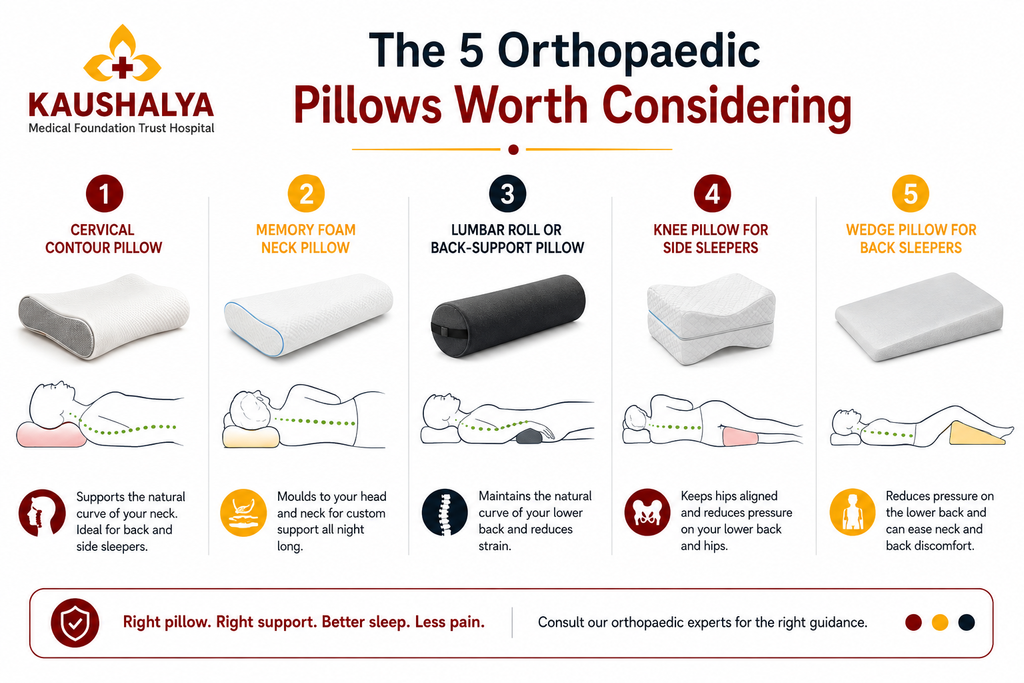
1. Cervical Contour Pillow
A cervical contour pillow is shaped with a raised edge and a dipped centre, designed to cradle the head while supporting the natural curve of the neck. It works well for both back and side sleepers and is usually the first recommendation for general neck pain.
Look for one with adjustable height or a dual-height design, since neck support needs differ meaningfully between back and side sleeping.
2. Memory Foam Neck Pillow
Memory foam moulds to the exact shape of your head and neck, which keeps support consistent even as you shift position during the night. It’s particularly useful for people who toss and turn, since it adjusts rather than requiring you to find one fixed “correct” spot.
The trade-off is heat retention in some foams, so a cooling-gel infused version is worth the small extra cost if you sleep hot.
3. Lumbar Roll or Back-Support Pillow
A lumbar roll is a firm, cylindrical pillow placed in the small of the back, either while sleeping on your side or sitting for long periods. It maintains the natural inward curve of the lower spine, which flattens out and strains surrounding muscles when unsupported for hours.
This is less about the neck and more about lower back pain specifically, and it’s often underused compared with neck pillows despite being just as effective for the right complaint.
4. Knee Pillow for Side Sleepers
A knee pillow, placed between the knees while side sleeping, keeps the hips and pelvis level and stops the top leg from rotating the lower spine out of alignment. This is one of the simplest, most evidence-backed fixes for lower back and hip pain in side sleepers.
Choose one thick enough to fully fill the gap between your knees when lying on your side, rather than a thin, flat one that compresses under weight.
5. Wedge Pillow for Back Sleepers
A wedge pillow placed under the knees while sleeping on your back reduces pressure on the lower spine by gently bending the hips and knees, taking tension off the lumbar region. Some wedge designs also elevate the upper body slightly, which can help with combined neck and back discomfort.
This is a good option for people who can’t tolerate side sleeping due to shoulder or hip pain but still need lower back support.
Which Pillow Suits Your Pain and Sleep Position?
| Pain Location | Sleep Position | Best Pillow |
| Neck, general | Back or side | Cervical contour pillow |
| Neck, restless sleeper | Any | Memory foam neck pillow |
| Lower back | Side or seated | Lumbar roll |
| Hip and lower back | Side | Knee pillow |
| Lower back | Back | Wedge pillow |
When a Pillow Isn’t Enough
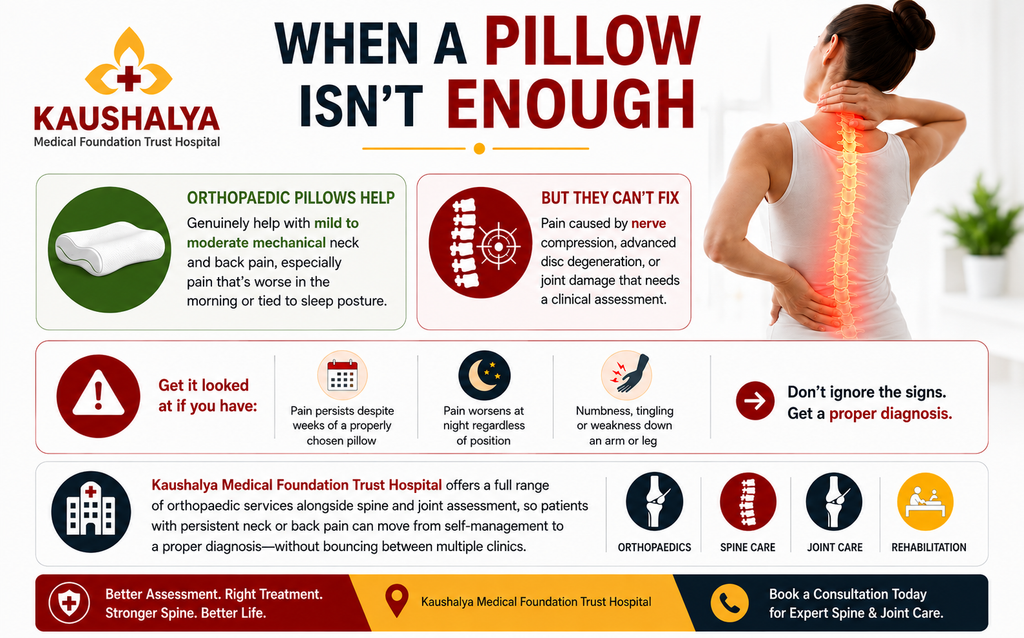
Orthopaedic pillows genuinely help with mild to moderate mechanical neck and back pain, especially pain that’s worse in the morning or clearly tied to sleep posture. What they can’t fix is pain caused by nerve compression, advanced disc degeneration, or joint damage that needs a clinical assessment.
If your pain persists despite weeks of a properly chosen pillow, worsens at night regardless of position, or comes with numbness, tingling, or weakness down an arm or leg, that’s a signal to get it looked at rather than trying yet another pillow.
Kaushalya Medical Foundation Trust Hospital in Thane offers a full range of orthopaedic services alongside spine and joint assessment, so patients dealing with persistent neck or back pain can move from self-management to a proper diagnosis without bouncing between multiple clinics.
Frequently Asked Questions
How often should I replace my orthopaedic pillow? Most orthopaedic pillows lose their supportive shape after 18-24 months of regular use. If yours feels flattened, lumpy, or no longer holds its contour, it’s worth replacing even if it hasn’t reached that age.
Can the wrong pillow actually cause neck pain, or just fail to help it? Yes, it can actively cause pain. A pillow that’s too high or too flat forces the neck into an unnatural position for hours nightly, and sustained poor alignment during sleep is a documented contributor to neck pain and stiffness.
Is a firmer or softer pillow better for back pain? It depends on the specific pain. Lower back pain from side sleeping benefits from a firm knee pillow, while general comfort pillows for back sleepers can be softer, as long as they still provide enough support to fill the gap under the knees.
Should side sleepers and back sleepers use different pillows? Yes, generally. Side sleepers need higher, firmer support to fill the larger gap between shoulder and head, while back sleepers usually need a lower profile pillow that doesn’t push the chin toward the chest.
When should I see a doctor instead of trying another pillow? See a doctor if pain persists beyond a few weeks despite proper pillow support, worsens progressively, or comes with numbness, tingling, or weakness. These symptoms suggest the issue may not be purely postural.
Persistent neck or back pain that isn’t responding to sleep changes deserves a proper look. Talk to our orthopaedic team at Kaushalya Hospital for an assessment and a clear plan forward.