
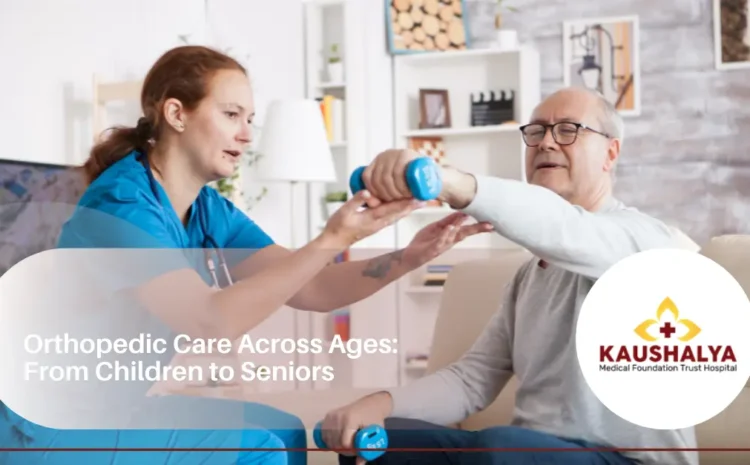
Orthopaedic health is not age-specific. Since a young child learns to walk, and later on in life, a person attempts to move around, bones and joints require appropriate care at each stage of his or her life.
Orthopaedic care is aimed at maintaining the musculoskeletal system in a strong, flexible, and pain-free state to allow individuals to go on with their lives and become self-sufficient and active.
The various age groups experience various challenges in terms of bones and joints. Early diagnosis and prompt treatment and care of the right age are important in avoiding long-term complications and enhancing quality of life.
Orthopaedic Care in Children: Strong Foundations
Bones of children are still developing, something that is very crucial at a tender age, hence the need to take special care of these children in terms of orthopaedics. It is the right attention at the right stage that will guarantee good growth and the avoidance of future issues.
Typical Orthopaedic Problems in Children
Bone or joint problems affect many children as a result of growth spurts, postures, or physical activity. Certain ones are short-term, whereas others require medical care.
- Bow legs or knock knees
- Flat feet
- Congenital bone conditions
- Sports-related injuries
- Fractures due to falls or accidents.
Early diagnosis assists doctors in directing the growth of bones and preventing irreversible deformities.
Significance of Early Diagnosis and Treatment
Orthopaedic problems can be treated more easily and effectively when detected early. Non-surgical procedures like braces, physiotherapy, or activity correction are effective in children.
Early care helps children:
- Grow with proper posture
- Prevent chronic adult pain.
- Stay active and confident
Orthopaedic Teenage and Young Adult Care
The adolescent period is a time of fast development and physical activity. This stage requires special orthopaedic care to deal with bone and joint stress
Sports Injuries and Growth-Related Concerns
Teenagers usually engage in sports, thereby exposing themselves to injuries. Growth plates are delicate and may be destroyed if the injuries are neglected.
Common concerns include:
- Ligament tears
- Stress fractures
- Back and knee pain
- Shoulder injuries
Early intervention allows preventing harm in the long run and provides a safe resumption of activity.
Keeping Bones Healthy in Early Adulthood
Although young adults might not experience imminent problems, current habits will have an impact on future bone health. The joints may become weak due to poor posture, prolonged sitting, and exercise.
Healthy practices include:
- Regular physical activity
- Balanced calcium-rich diet
- Proper sitting at work and at home.
Middle-Age Orthopaedic Care: Wear and Tear
At middle age, the body begins to display evidence of wear in the joints. Mobility starts to be influenced by daily activities, work pressure, and lifestyle decisions.
Pain in the joints and arthritis
Most of the adults begin to feel stiff and aching, particularly in the knees and hips as well as the lower back. The symptoms could be early signs of arthritis or degeneration of the joints.
Common signs include:
- Morning stiffness
- Pain after long walks
- Reduced flexibility
- Swelling around joints
Early management is used to delay the progression of a disease and to alleviate pain.
Long-term mobility: Preventive orthopaedic care
At this phase, preventive care is necessary. Easy lifestyle modifications and healthcare recommendations can postpone the necessity of complicated procedures.
Preventive steps include:
- Weight management
- Physiotherapy exercises
- Routine bone examinations.
In other severe situations, surgical measures such as hip replacement surgery in Mumbai can be recommended when the damage to the joint has a severe impact on everyday life.
Orthopaedic Care to Elderly: Recovery of Comfort and Independence
When individuals get older, their bones become weak, and their joints stiffen. Senior orthopaedics is concerned with pain, movement, and self-sufficiency.
The Age-Associated Bone and Joint Conditions.
It is natural ageing that increases the susceptibility of older people to chronic orthopaedic conditions.
Common conditions include:
- Osteoporosis
- Severe arthritis
- Hip and knee joint damage
- Spine degeneration
These problems may restrict movement and overall health if they are not addressed.
Surgical And Other Advanced Treatments
Orthopaedic practises in modern times aid the elderly to be active and self-assured. Surgical solutions can be considered when the non-surgical methods have not proved to be effective.
More advanced care choices are:
- Joint replacement corrective procedures.
- Minimal invasive operations.
- Post-surgery rehabilitation
Hip replacement surgery in Mumbai has proven to be a sure way of restoring movement and reducing pain for patients who have developed severe hip pain.
Significance of Rehabilitation and Physiotherapy at every age
Orthopaedic care is incomplete without rehabilitation, no matter the age. It helps in healing, building up muscles, and preventing injuries in the future.
Physiotherapy Role in Recovery
Physiotherapy assists the patients in restoring their energy and abilities following trauma or surgery. It also enhances posture and balance.
Benefits include:
- Faster healing
- Reduced pain
- Improved joint movement
- Better quality of life
Long-Term Effect of Following-Up Consistently
Follow-ups are used on a regular basis to check the progress and change treatment plans. This guarantees the long-term outcomes and avoidance of complications, particularly following the large-scale operations such as hip replacement surgery in Mumbai.
Conclusion
Orthopaedic care is a lifelong process that evolves as one grows. Early and specialised care is important to maintain the healthy development of children or to restore mobility in old age. Having sophisticated machinery, skilled professionals, and patient-centred care, hospitals such as Kaushalya Medical Foundation Trust Hospital have remained in the position of ensuring bone and joint health amongst all age groups in order to see patients lead a healthy and pain-free life.
FAQs
At what age are children supposed to visit an orthopaedic doctor?
In case of abnormal walking patterns, constant pain, or slow physical development, children must visit an orthopaedic doctor. Early assessment is effective in avoiding complications in the future.
At what age is joint replacement surgery indicated?
Surgery is recommended in cases of severe pain, when movement is limited, and non-surgical methods do not help. The patient should be evaluated in detail before making a decision.
What can the elderly do to keep their bones and joints healthy?
The elderly can keep their bones healthy by exercising on a regular basis, eating a diet rich in calcium, visiting a doctor frequently, and adhering to medical recommendations with regard to their current ailments.